
You notice your air conditioner isn’t cooling like it used to. Your energy bills are creeping up, and you might even hear a faint hissing sound near the indoor unit. The most likely culprit? A refrigerant leak. Finding that tiny leak in miles of copper tubing can feel like searching for a needle in a haystack. That’s where a specialized tool becomes your best friend: the refrigerant leak detector. In this guide, I’ll explain how the most common type—the detector pen—works, how to use it safely, and what you need to know before you buy one.
Safety Disclaimer: This is Not a DIY Repair
WARNING: Refrigerant is a controlled substance. Handling it requires EPA Section 608 certification. This guide is for informational purposes only to help you understand the process. Opening your AC’s sealed refrigerant system is dangerous and illegal for uncertified individuals. It involves high pressures, electrical components, and chemicals that can cause frostbite, respiratory issues, or be flammable. Always hire a licensed HVAC technician for leak detection, repair, and refrigerant handling. Your safety and compliance with federal law are paramount.
How a Refrigerant Leak Detector Pen “Sniffs” Out Trouble
Think of your air conditioner’s refrigerant like the blood in your body. It circulates in a closed loop (the copper lines), carrying heat from inside your house to the outside. A leak is like a small cut—the system loses its vital “blood,” and pressure drops, causing the whole system to struggle.
A halogen leak detector pen is like a highly sensitive bloodhound for that specific “scent.” Most modern refrigerants (like R-410A) are made of chemicals called halogens. The tip of the pen contains a sensor that heats up. When air is drawn over this heated sensor, if it contains even trace amounts of halogen gas from a leak, it changes the electrical current inside the pen. This triggers the audible alarm (a beep) and often a flashing light.
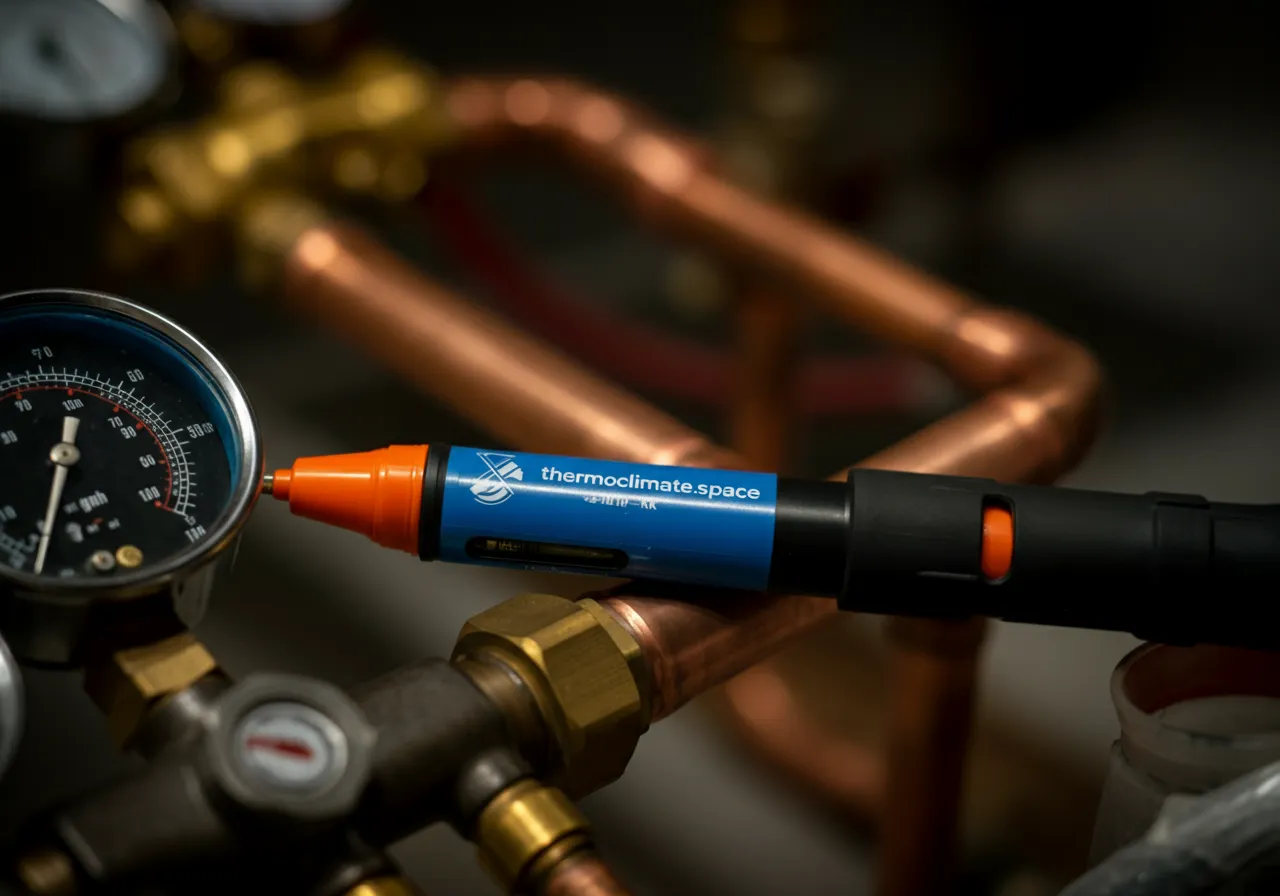
The key analogy: You can’t see or smell the refrigerant leak itself. The detector pen acts as an electronic nose, translating an invisible chemical presence into a sound and light you can perceive, pinpointing the exact spot of the “injury” to your system.
Choosing and Using a Leak Detector Pen: An Informational Breakdown
While I strongly recommend leaving the actual repair to a pro, understanding the tool and process can make you an informed homeowner when discussing the issue with your technician.
What Makes a Good Leak Detector?
- Sensitivity: Measured in “grams per year” (g/yr) or parts per million (ppm). A good pen can detect leaks as small as 0.1 oz/year (3-4 g/yr). The lower the number, the better.
- Response Time: How quickly it beeps once it finds a leak. Faster is better for pinpointing.
- False Alarm Resistance: Some cleaners, solvents, or even cigarette smoke can trigger false alarms. Better models have filters or algorithms to reduce this.
- Audible/Visual Alarm: A loud beep and a bright LED are essential in noisy mechanical rooms.
Step-by-Step: How a Technician Uses a Leak Detector Pen
- Prepare the System: The system must have a charge of refrigerant (pressure) for a leak to be detectable. A completely empty system cannot be checked with this tool.
- Power On & Calibrate: Turn the pen on in a clean air area away from the unit to let it stabilize. Many pens self-calibrate.
- Start at the Most Likely Spots: Slowly move the tip (about 1/4 inch per second) along all copper tubing connections, valves, the compressor seals, and the coils. Leaks most often occur at joints and wear points.
- Listen for the Alarm: When the pen beeps consistently, slow down. Move the tip around that area to find the exact point where the alarm is loudest and most urgent—that’s your leak epicenter.
- Mark and Verify: Once pinpointed, the technician will mark the spot with tape or a marker. They often use a secondary method, like bubble solution, for visual confirmation before repair.
Common Signs You Might Have a Refrigerant Leak
- Reduced cooling or heating (heat pump) performance.
- Ice forming on the copper lines or indoor coil.
- Hissing or bubbling noises from the refrigerant lines.
- A sudden, significant increase in your monthly energy bill.
- The system short-cycling (turning on and off frequently).
Leak Detector Pen vs. Other Methods: A Quick Comparison
| Method | How It Works | Best For | Limitations |
|---|---|---|---|
| Electronic Halogen Pen | Heated sensor detects halogen gases. | General pinpointing, affordable, easy to use. | Can have false alarms; sensitivity can drift. |
| Ultrasonic Detector | Listens for high-frequency sound of gas escaping. | Noisy environments, any gas type (air, nitrogen, refrigerant). | Hard to pinpoint exact spot in very noisy areas. |
| Fluorescent Dye & UV Light | Dye circulates with refrigerant, glows under UV at leak site. | Very small, slow leaks; provides lasting evidence. | Requires adding dye to system; must circulate for hours/days. |
| Bubble Solution (Soapy Water) | Applied to suspected area; bubbles form at leak. | Confirming a leak found by another method; large, obvious leaks. | Messy; ineffective for tiny leaks or hard-to-reach spots. |
Maintenance Tips for Your AC System to Prevent Leaks
- Schedule Annual Maintenance: A professional tune-up includes checking for leak indications, tightening electrical connections, and cleaning coils, which reduces corrosion.
- Keep the Area Clean: Prevent lawn equipment from hitting the outdoor condenser coil and lines. Keep vegetation trimmed back.
- Protect Linesets: Ensure the copper lines running to your outdoor unit are not rubbing against the house or are unprotected where they could be damaged.
- Listen to Your System: Unusual noises or a drop in performance is your first clue. Address it early.
Frequently Asked Questions (FAQ)
Can I buy and use a refrigerant leak detector pen myself?
You can purchase one, but using it to attempt a repair is not legal or safe without EPA 608 certification. As a homeowner, you might use one for curiosity or to check a small appliance (like a dorm fridge) that uses a minimal charge, but for your home HVAC system, always call a pro. The EPA’s Section 608 page outlines the strict regulations governing refrigerant.
My detector pen is beeping everywhere. What does that mean?
This usually indicates one of three things: 1) A very large leak is contaminating the entire area, 2) There are contaminants in the air (cleaners, aerosols, alcohol) triggering false positives, or 3) The sensor in the pen is dirty or faulty. A technician will move to a clean air source to “zero” the pen and may use nitrogen to purge the area before testing again.
Are leak detector pens accurate for all types of refrigerant?
Most standard halogen leak detectors are designed for common HFC and HCFC refrigerants like R-410A, R-134a, and R-22. However, new “mildly flammable” A2L refrigerants (like R-32) and natural refrigerants (like R-717 Ammonia) may require specialized detectors. Always check the manufacturer’s specifications for the gases a specific model can detect.
The Bottom Line
A refrigerant leak detector pen is an invaluable, precise tool in the HVAC technician’s arsenal for solving a very common problem. While the concept is simple—an electronic nose for invisible gas—using it effectively requires knowledge, experience, and proper certification. If you suspect a leak, your best and safest course of action is to call a licensed professional. They have the right tools, like a high-quality leak detection device, and the expertise to find the leak, repair it correctly, and restore your system’s charge legally and efficiently, saving you money and hassle in the long run.