
You’re looking to cool your home, or maybe you need a new system altogether. As you research, you keep seeing two main options: the traditional air conditioner and the increasingly popular heat pump. The choice can feel confusing. Is a heat pump just an air conditioner that also heats? Which one is right for your climate and your wallet? Making the wrong decision can lead to years of discomfort and unexpectedly high energy bills. Let’s cut through the jargon and break down the real-world differences between these two systems so you can make an informed choice for your home.
The Core Difference: A Simple Analogy
Think of your home’s HVAC system like a car. A standard air conditioner is a car that only has a reverse gear. It can only move heat in one direction: from inside your house to the outside. It’s fantastic at cooling, but to heat your home, you need a completely separate system—like a furnace (gas, oil, or electric)—to provide the “drive” gear.
A heat pump, on the other hand, is like a car with a sophisticated, seamless transmission that can instantly switch between drive and reverse. In the summer, it operates in “reverse” (cooling mode), moving heat from inside to outside, just like an AC. In the winter, it shifts into “drive” (heating mode), and here’s the magic part: it reverses the refrigerant flow to extract existing heat energy from the outdoor air (even when it’s cold) and pumps it inside. It doesn’t create heat by burning fuel; it moves it.
⚠️ Critical Safety Disclaimer
Warning: High Voltage & Refrigerant Hazards
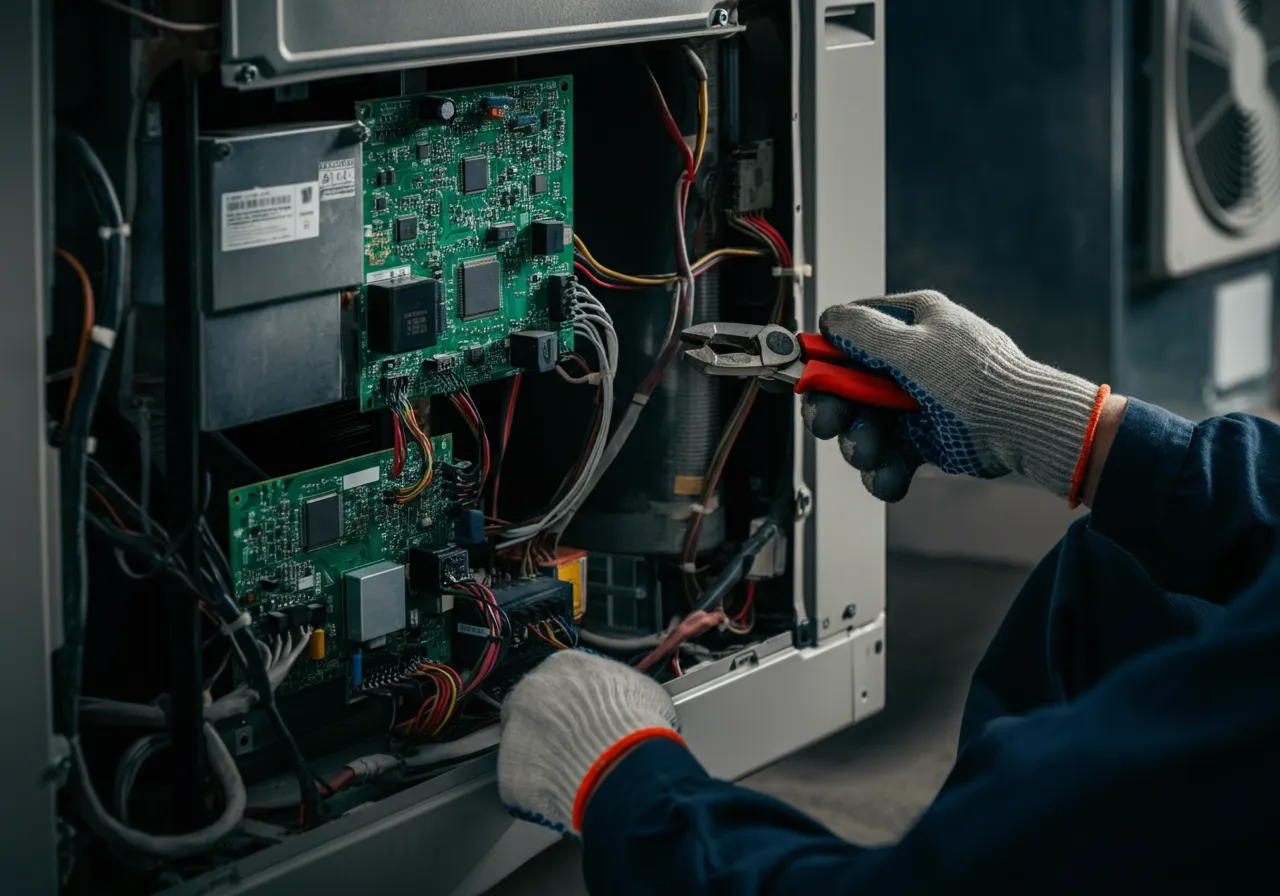
Both air conditioners and heat pumps contain high-voltage electrical components and pressurized refrigerant lines. Attempting to install, repair, or service the internal mechanical or electrical parts of these systems is extremely dangerous and should only be performed by a licensed and insured HVAC professional. Incorrect handling can result in severe electrical shock, refrigerant burns, system damage, or even fire. This guide is for educational purposes to help you understand your options and communicate effectively with your contractor.
Heat Pump vs Air Conditioner: The Detailed Breakdown
Now that you understand the fundamental “one-way vs. two-way” concept, let’s look at the practical implications. This isn’t just about mechanics; it’s about performance, cost, and suitability.
How They Work as a Complete System
- Air Conditioner (AC) System: An AC is only half of a heating and cooling solution. It consists of an outdoor condenser/compressor unit and an indoor evaporator coil. It must be paired with a separate heating system, such as a gas furnace, an electric furnace, or a boiler, to provide year-round comfort.
- Heat Pump System: A heat pump is an all-in-one heating and cooling appliance. It uses the same set of components (outdoor unit, indoor coil/air handler) to both heat and cool. In colder climates, it’s often paired with a supplemental heat source, like a gas furnace (creating a “dual-fuel” system) or electric resistance strips inside the air handler, for those days when the outdoor temperature is too low for it to work efficiently alone.
Side-by-Side Comparison
| Feature | Air Conditioner (with Furnace) | Heat Pump |
|---|---|---|
| Primary Function | Cooling only | Both heating and cooling |
| Heating Method | Separate furnace (burns fuel or uses electric resistance) | Moves existing heat from outdoor air (uses refrigeration cycle) |
| Energy Efficiency | Cooling efficiency rated by SEER. Heating efficiency depends on furnace type (AFUE). | Extremely efficient for both modes. Cooling: SEER. Heating: HSPF. Can be 300-400% efficient vs. electric heat. |
| Operating Cost | Heating cost depends on furnace fuel (gas, oil, electric). Gas is often cheaper than heat pump electric heat in very cold climates. | Lower heating cost than electric furnaces/heaters. Cost vs. gas depends heavily on local utility rates and climate. |
| Climate Suitability | Excellent for all climates. Paired furnace handles all winter heating. | Ideal for mild to moderate climates. Modern cold-climate models work well below freezing, but supplemental heat may be needed in extreme cold. |
| Upfront Cost | Typically lower for the AC unit itself, but you must also purchase a furnace. | Higher unit cost than an AC alone, but you’re getting two systems in one. Often comparable to AC + Furnace total. |
| Lifespan | AC: 12-15 years. Furnace: 15-20 years. | 10-15 years. May experience more wear in climates with year-round use. |
Which System is Right For You? A Step-by-Step Decision Guide
- Assess Your Climate: Look at your winter lows. If temperatures regularly dip below 25-30°F for extended periods, a heat pump may need a costly supplemental heat source (like a gas furnace for a dual-fuel system). In mild winters, a heat pump shines.
- Evaluate Your Current Heating System: Do you have a functional, efficient gas furnace? Replacing just the AC might be most cost-effective. If your furnace is old or you use expensive electric baseboards/oil heat, a heat pump can offer significant savings.
- Compare Local Energy Costs: Get your utility rates (cost per therm of gas vs. cost per kWh of electricity). A high gas price and lower electricity price favor a heat pump. The opposite favors an AC with a gas furnace.
- Consider Incentives & Long-Term Goals: Heat pumps often qualify for substantial rebates and tax credits (like federal IRA credits) aimed at electrification and efficiency, which can drastically reduce net cost.
- Get a Professional Load Calculation & Quote: This is non-negotiable. Contact a reputable HVAC contractor. They should perform a Manual J calculation to size the system correctly and provide detailed quotes for both options, including lifetime operating cost estimates.
Common Symptoms & Troubleshooting Context
Understanding your system helps you describe problems accurately to your technician.
- For Both Systems (Cooling Issues): Weak airflow, warm air from vents, ice on coils, unusual noises, or system not turning on. Often related to refrigerant levels, dirty filters/coils, or capacitor failures.
- Heat Pump Specific (Heating Issues): System running constantly but not warming the house, blowing cool air in heat mode, or frequently switching to “auxiliary” or “emergency” heat (which is expensive electric resistance heat). This could indicate a reversing valve problem, low refrigerant, or a faulty defrost cycle.
Essential Maintenance for Peak Performance
- For Both: Change your air filter every 1-3 months. Keep outdoor units clear of leaves, grass, and debris (at least 2 feet of clearance).
- Annual Professional Service: Schedule a tune-up twice a year for a heat pump (spring and fall), or once for an AC (spring). The technician will check refrigerant charge, electrical connections, coils, and system controls.
- Heat Pump Tip: In winter, make sure the outdoor unit can drain freely during its defrost cycle. Do not cover it with a tarp that blocks airflow.
Frequently Asked Questions (FAQ)
Can a heat pump cool as well as a standard air conditioner?
Absolutely. In cooling mode, a heat pump functions identically to a high-efficiency central air conditioner. The cooling capacity and efficiency are measured by the same SEER rating. A 16 SEER heat pump cools just as effectively as a 16 SEER AC.
Do heat pumps work in freezing temperatures?
Yes, but with a caveat. Modern cold-climate heat pumps are designed to operate efficiently at temperatures well below freezing. However, their heating capacity decreases as it gets colder. Below a certain balance point (often around 25-35°F), most systems will use supplemental heat to maintain comfort. This is why a dual-fuel system with a gas furnace can be ideal in very cold regions.
Is a heat pump more expensive to repair than an AC?
Potentially, but not drastically. A heat pump has a few additional components, like a reversing valve and a defrost control board, that a standard AC does not. If one of these fails, it is an extra repair cost. However, the core components—compressor, coils, fan motors—are similar, and their repair costs are comparable. Proper maintenance is the best way to minimize repair costs for either system.
Final Recommendation
Choosing between a heat pump and an air conditioner isn’t about which technology is “better,” but which is better for your specific situation. For homes in milder climates or those looking to replace inefficient electric heat, a heat pump is often the standout choice for year-round efficiency and comfort. In regions with harsh winters and cheap natural gas, pairing a new AC with your existing or a new high-efficiency gas furnace may be the most economical path. Your best move is to arm yourself with this knowledge and then partner with a trusted HVAC professional who can analyze your home’s unique needs and provide a clear, customized comparison.