
You’re tired of the summer heat turning your home into a sauna, and your window AC units are noisy, inefficient eyesores. A ductless mini split system seems like the perfect solution—efficient, quiet, and zoned comfort. But then you get the quote: thousands of dollars in labor for installation. Enter the promise of the DIY mini split kit. Sold online and in some big-box stores, these kits market themselves as a way for savvy homeowners to bypass professional installers and save a bundle. But is installing your own mini split a realistic weekend project, or a fast track to a costly, dangerous mistake? Let’s break it down from the perspective of a 20-year HVAC tech.
The Crucial Disclaimer: Why This Isn’t Like Assembling IKEA Furniture
SAFETY & LEGAL WARNING: Installing a mini split system involves working with high-voltage electricity (220-240V), drilling through structural elements of your home, and handling refrigerant—a pressurized gas that requires an EPA certification (Section 608) to legally purchase and handle. Incorrect installation can lead to:
- Electrocution, fire, or serious injury.
- Refrigerant leaks which are harmful to the environment and can cause the system to fail.
- Voiding the manufacturer’s warranty (most require professional installation for validation).
- Water damage from improperly drained condensate.
- Reduced efficiency, premature failure, and costly “prove-it-was-installed-wrong” repairs.
This article is for informational purposes only. We strongly recommend consulting with and hiring a licensed, insured HVAC professional for the installation of any mini split system. The following information explains the complexity involved so you can make an informed decision.
How a Mini Split Works: The “Heart and Lungs” of Your Home’s Comfort
Think of a ductless mini split system like your body’s circulatory and respiratory systems working together. The outdoor unit (condenser) is the heart. It contains the compressor, which pumps refrigerant (the lifeblood) through the lines. The indoor unit (air handler) is the lungs. It absorbs heat from your room’s air and exhales cool, conditioned air back out. The refrigerant lines (the arteries and veins) connect them, carrying the refrigerant that absorbs and releases heat.
The magic—and the difficulty—lies in creating a perfectly sealed, clean, and dry pathway for that refrigerant to travel. Any contamination (moisture, dirt) or a leak is like a blood clot or a collapsed lung; the entire system fails to function properly.
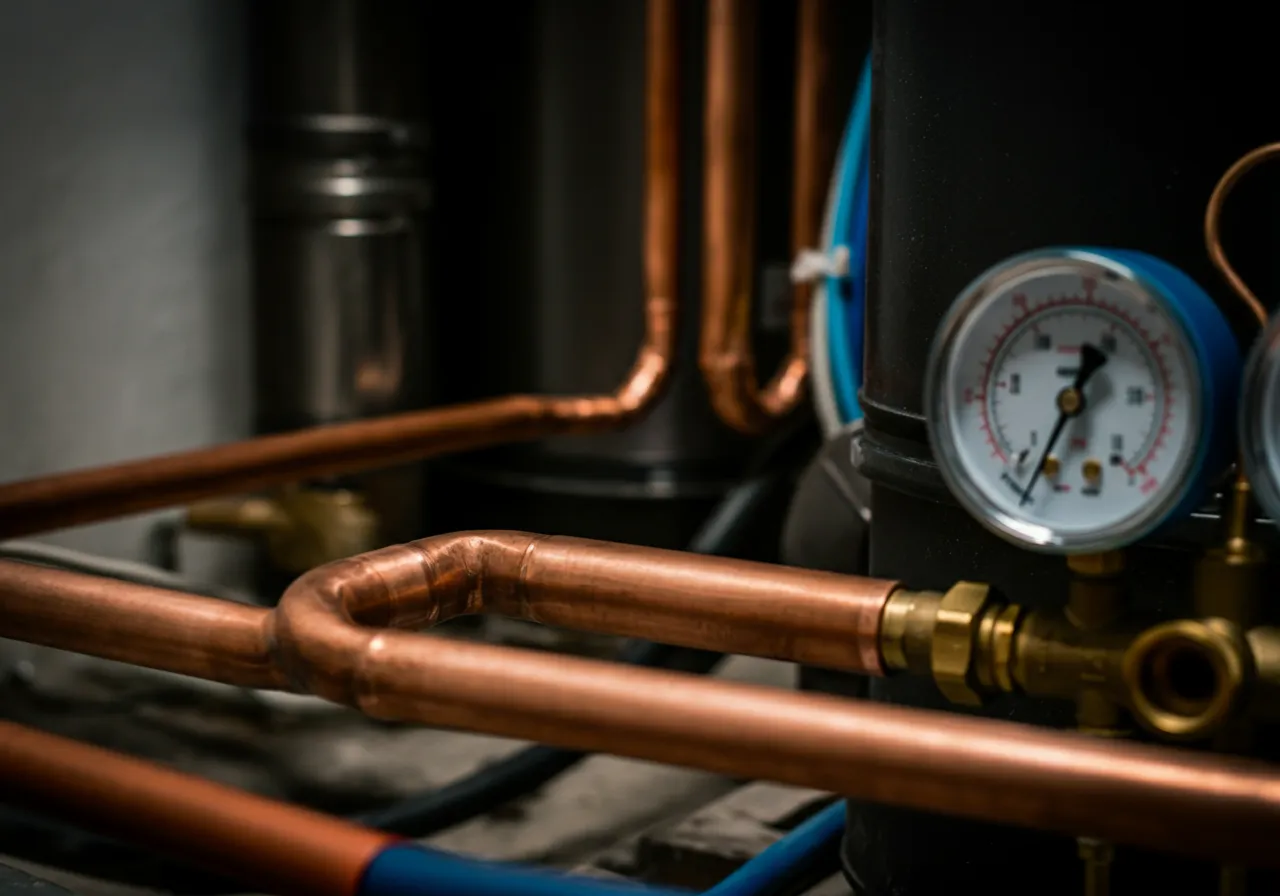
What’s Really in a DIY Mini Split Kit? The Breakdown
These kits typically include the core components: an outdoor condenser, one or more indoor air handlers, a remote control, and the connecting line set (pre-charged with refrigerant in some cases). The key selling point is the “pre-charged lines,” which claim to eliminate the need for a vacuum pump and manifold gauges. Here’s the reality check.
The Professional Process vs. The DIY Kit Promise
| Professional Installation Step | DIY Kit Challenge & Risk |
|---|---|
| Load Calculation & Sizing: Using Manual J software to determine the exact BTU capacity needed for your room. | You guess the size. Too small = doesn’t cool. Too large = short cycles, high humidity, wasted money. |
| Electrical Hookup: Running a dedicated 220V circuit from your main panel with the correct breaker and wire gauge. | Requires advanced electrical knowledge. Incorrect wiring can damage the unit or cause a fire. |
| Mounting & Drilling: Securely mounting the heavy outdoor unit on a stable pad and drilling a perfectly sloped 3″ hole through your wall for the lines. | Structural and water intrusion risks. The hole must be sealed perfectly from the elements. |
| Flaring & Connecting Lines: Creating perfect, leak-free flares on the copper tubing using a precision flaring tool. | A poorly made flare is the #1 cause of refrigerant leaks in DIY jobs. It’s a skill that takes practice. |
| Evacuation & Dehydration: Using a powerful vacuum pump for 30+ minutes to remove all air and moisture from the lineset (a critical step). | Pre-charged lines try to bypass this, but if any connection is opened or the line is extended, a vacuum is absolutely required. Moisture left inside causes acid formation and compressor death. |
| Leak Testing & Commissioning: Checking for leaks with electronic detectors, verifying pressures, and testing all modes of operation. | Often skipped. The system might seem to work initially, but a slow leak leads to failure in 6-12 months. |
If You Proceed: The Absolute Minimum Tool & Knowledge Checklist
If, after all these warnings, you are mechanically inclined and determined to attempt a self-installed mini split, you cannot rely on the kit’s basic instructions alone. You will need:
- Tools: High-quality flaring tool (not the cheap one in the kit), tube cutter, deburring tool, torque wrenches, manifold gauge set, a high-quality vacuum pump, multimeter, drill with hole saw, level.
- Knowledge: How to run a 220V circuit (or hire an electrician for just this part), how to create a perfect flare, how to perform a deep vacuum decay test (pulling to below 500 microns), understanding basic refrigeration principles.
- Legal Requirement: An EPA Section 608 Type I or Universal Certification to legally handle the refrigerant. Kits with “pre-charged” lines get around this by having sealed connections, but the moment you need to adjust or repair, you’re breaking the law without it.
Real-World Troubleshooting: Signs Your DIY Install is in Trouble
- Ice Building on the Indoor Unit: This is a classic sign of low refrigerant charge (a leak) or insufficient airflow (often from incorrect sizing).
- Water Dripping Inside the Room: The condensate drain line is improperly pitched or clogged. This can cause significant drywall damage.
- System Won’t Turn On or Trips Breaker: Incorrect electrical wiring or a faulty connection.
- Poor Cooling/Heating Performance: Likely due to incorrect sizing, a leak, or air/moisture in the system.
- Loud Hissing or Gurgling Noises: Almost certainly a refrigerant leak.
Fixing these issues after a botched DIY installation often costs more than a professional install would have in the first place, as a technician must first diagnose and undo the mistakes.
The Smart Homeowner’s Alternative: The “Hybrid” Approach
You can still save money without assuming all the risk. Consider this:
- Purchase the Equipment Yourself: Buy the mini split kit you want.
- Handle the “Handyman” Tasks: Install the wall brackets, drill the hole, and maybe even run the lineset through the wall. Prepare the site.
- Hire a Pro for the Critical Steps: Pay a licensed HVAC technician for a “trim-out” or startup service. They will make the final electrical and refrigerant connections, perform the evacuation, leak test, and commission the system. This ensures warranty validity and system longevity.
This gives you control over the equipment cost while leaving the lifeblood of the system in expert hands. For a deeper understanding of proper installation techniques that pros use, refer to this guide from the Air-Conditioning, Heating, and Refrigeration Institute (AHRI), a leading industry authority.
FAQ: Your DIY Mini Split Questions Answered
1. Are the “pre-charged” line sets really easier?
They simplify one step but create a false sense of security. They only work if the included line is the exact length you need. If you need to extend or shorten it, you must flare new connections and perform a full vacuum, defeating the purpose. They also make future repairs more complex.
2. Can I get the refrigerant to charge the system myself?
No. Purchasing refrigerant requires an EPA 608 certification. Selling it to uncertified individuals is illegal. The “DIY-friendly” kits use pre-charged lines specifically to navigate this regulation, but they are not a solution for repairs or modifications.
3. How much money can I really save with a DIY install?
You might save $1,500 – $3,000 on labor upfront. However, factor in the cost of specialized tools (~$500+), your time (15-25 hours for a first-timer), and the high risk of a ~$1,000+ repair bill or complete system loss if installed incorrectly. For most, the financial risk outweighs the potential savings.
Final Verdict from the Toolbox
While DIY mini split install kits are marketed as an accessible project, they are arguably one of the most technically demanding tasks a homeowner can attempt. The process touches on advanced electrical, plumbing, and refrigeration skills where small errors have big consequences. For 95% of homeowners, the “hybrid” approach or hiring a qualified professional from the start is the wisest investment. It ensures your comfort system is reliable, efficient, covered by warranty, and most importantly—safe. Your home’s comfort system is not the place to cut the most critical corners.