
You know the feeling. You walk inside, expecting a cool refuge, and are instead greeted by a wall of stale, warm air. Your central air conditioner is down, and the discomfort—and anxiety about cost—starts to rise immediately. As a technician who’s been in thousands of homes, I can tell you that not every AC failure is a catastrophe. This guide will help you understand what’s happening, what you can safely check, and when it’s absolutely time to call a professional for central AC repair.
How Your Home’s Cooling System Actually Works (The Highway Analogy)
Think of your central air system as a specialized highway for heat. Its sole job is to pick up heat from inside your house and dump it outside.
- The Refrigerant: This is the “delivery truck” that carries the heat. It’s a special fluid that changes from a liquid to a gas and back again very easily inside sealed copper coils.
- The Evaporator Coil (Inside): Located in your furnace or air handler, this is the “loading dock.” Warm indoor air is blown over this cold coil. The refrigerant inside the coil absorbs the heat, cooling the air, and evaporates into a gas.
- The Compressor (Outside): This is the “engine” of the truck. It pressurizes the now-gaseous refrigerant, packing the heat energy tightly and sending it on its way.
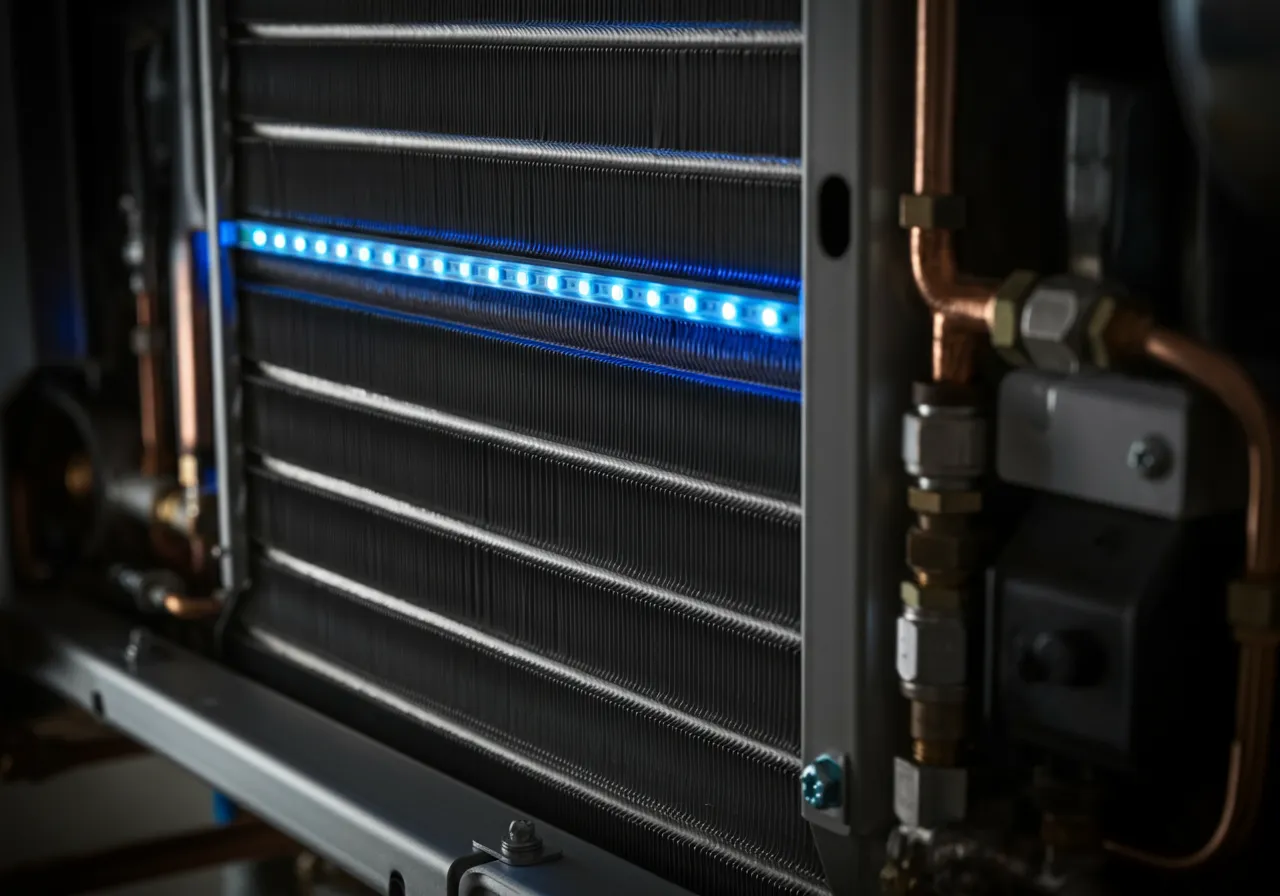
- The Condenser Coil (Outside): This is the “unloading dock.” The hot, pressurized gas releases its heat to the outside air as a fan blows over the coil. The refrigerant condenses back into a liquid.
- The Expansion Valve: This is the “toll booth.” It regulates the flow of liquid refrigerant back to the evaporator coil, dropping its pressure so it can cool down and start the cycle again.
When your AC fails, it’s usually because there’s a breakdown at one of these critical points on the highway.
⚠️ Critical Safety Disclaimer
STOP. READ THIS FIRST. Air conditioners involve high-voltage electricity, pressurized refrigerant, and sharp metal components. Do not attempt to repair electrical components, refrigerant lines, or the sealed refrigeration system unless you are a trained and certified HVAC technician. Incorrect handling can result in severe electrical shock, refrigerant burns, system damage costing thousands, or even fire. The information below is for diagnostic understanding and basic troubleshooting only.
First Response: What to Check Before You Call for AC Service
Many service calls I run are for simple issues homeowners can fix. Always start here. It’s the equivalent of checking if the appliance is plugged in.
- The Thermostat: Is it set to “COOL” and the temperature is set below the current room temperature? Are the batteries dead (if applicable)?
- The Air Filter: Locate your furnace filter. Is it gray and clogged? A dirty filter is the #1 cause of reduced airflow, which can freeze your evaporator coil and shut the whole system down. Replace it if it’s dirty.
- The Circuit Breakers: Go to your main electrical panel. Find the breakers labeled for “AC,” “Furnace,” or “Air Handler” (inside unit) and “Condenser” (outside unit). Flip them fully OFF, then back ON. Do not force them.
- The Outdoor Unit: Is the condenser (the big metal box outside) clear of debris like leaves, grass, and overgrown shrubs? Is the fan inside it spinning when the thermostat calls for cooling? If the fan isn’t running but you hear a hum, turn the system off at the thermostat immediately to prevent compressor damage.
- The Drain Line: Find the white PVC pipe coming from your indoor air handler. If it’s clogged, a safety switch may have shut the system off. You can often clear it with a wet/dry vacuum.
Decoding the Symptoms: What Your AC’s Behavior is Telling You
If the quick checks above don’t solve it, your system is giving you clues. Here’s how to interpret them.
Common AC Problems and Their Likely Causes
| Symptom | Possible Culprit | Is it a DIY Fix? |
|---|---|---|
| AC runs but doesn’t cool (or weak cooling) | Low refrigerant charge (leak), dirty condenser coil, failing compressor. | No. Requires professional tools and certification. |
| AC won’t turn on at all | Tripped breaker, faulty thermostat, blown fuse in air handler, failed capacitor. | Maybe (thermostat/breaker). Capacitor replacement is for pros. |
| System cycles on and off constantly (short cycling) | Dirty filter/coil, low refrigerant, oversized unit, faulty sensor. | Maybe (filter/outdoor coil clean). Otherwise, No. |
| Ice forming on copper lines or indoor coil | Severely dirty air filter, low refrigerant, failing blower motor. | You can thaw it and change the filter, but the root cause needs a pro. |
| Unusual noises (grinding, screeching, banging) | Failing motor bearings, loose parts, debris in blower wheel, compressor issue. | No. Shut it off and call for service. |
Investing in Long-Term Health: Maintenance Over Major Repair
The best central air conditioning repair is the one you avoid. A little attention goes a long way.
- Filter Changes: This is non-negotiable. Change standard 1-inch filters every 1-2 months during peak season.
- Annual Professional Tune-Up: Have a technician clean the condenser coils, check refrigerant levels, inspect electrical connections, and verify system performance before summer hits. This is like an oil change for your AC.
- Keep it Clear: Maintain at least 2 feet of clearance around the outdoor condenser for proper airflow.
- Mind the Drain: Pour a cup of vinegar down the condensate drain line every few months to prevent algae clogs.
For a detailed breakdown of professional maintenance tasks, the U.S. Department of Energy has an excellent resource on maintaining your air conditioner.
Frequently Asked Questions (FAQ)
How much does a typical central AC repair cost?
Costs vary wildly by issue and region. Simple fixes like a capacitor or contactor replacement might be $150-$400. Major component repairs like a compressor or coil replacement can range from $1,500 to over $3,000. Always get a detailed, written estimate before authorizing work.
Should I repair my old R-22 system or replace it?
If your system uses R-22 refrigerant (common in units installed before 2010), you face a critical decision. R-22 is phased out and extremely expensive. A major leak repair requiring several pounds of R-22 can often cost more than half the price of a new, efficient R-410A system. Replacement is usually the smarter long-term investment.
How long should a central air conditioner last?
With proper maintenance, a quality central AC system has a typical lifespan of 12-15 years. As systems approach and exceed 15 years, the frequency and cost of central air conditioner repair often increase significantly, making replacement more economical.
Final Word from the Toolbox
Your central AC is a complex but understandable machine. Start with the simple checks—you’d be surprised how often they work. Pay attention to the symptoms; they are your best clues. And remember, your most powerful tool is preventative maintenance. When in doubt, or when the problem involves electricity, refrigerant, or the compressor, calling a licensed professional isn’t an expense—it’s an investment in your safety, your comfort, and the longevity of your system.