
You know that big, wall-mounted air conditioner you see in hotel rooms, senior living apartments, and older office spaces? The one that seems to be its own self-contained unit? That’s a Packaged Terminal Air Conditioner, or PTAC. If you manage a property with them or live in a space that uses one, you’ve likely faced the frustration of inconsistent temperatures, strange noises, or sudden failures that leave a room sweltering. Understanding what you’re dealing with is the first step to better comfort, lower energy bills, and smarter maintenance decisions.
What is a PTAC Unit? The “All-in-One” Wall Unit
A Packaged Terminal Air Conditioner (PTAC) is a self-contained, through-the-wall heating and cooling system. Unlike central air, which uses a network of ducts, a PTAC unit handles everything in one metal box that sits partly inside and partly outside your room. Think of it like a mini-fridge for your room’s climate: it takes in warm air, removes the heat and moisture, and blows back cool, dry air—all within its own chassis. Most modern units also provide electric heat, making them a year-round solution.
How Does a PTAC Work? The “Room-by-Room” Analogy
Let’s use a simple analogy. Imagine a central HVAC system as a restaurant kitchen that prepares all the food (conditioned air) and sends it through a network of waiters (ducts) to every table (room). A PTAC unit, however, is like a personal microwave oven installed right at your table. It only makes food for you. You control it independently, and it doesn’t rely on the main kitchen or waitstaff.
Technically, here’s the process inside that metal cabinet:
- The Fan pulls warm room air through a filter and over the cold evaporator coil.
- The Refrigerant inside that coil absorbs the heat from the air, cooling it down and condensing moisture (which drains away).
- The now-cooled air is blown back into the room.
- The heated refrigerant is pumped by the compressor to the condenser coil on the outdoor side of the wall.
- Another fan blows outside air across the hot condenser coil, dumping the absorbed heat to the outdoors, and the cycle repeats.
The heating function typically uses electric resistance coils (like a large toaster) within the same cabinet.
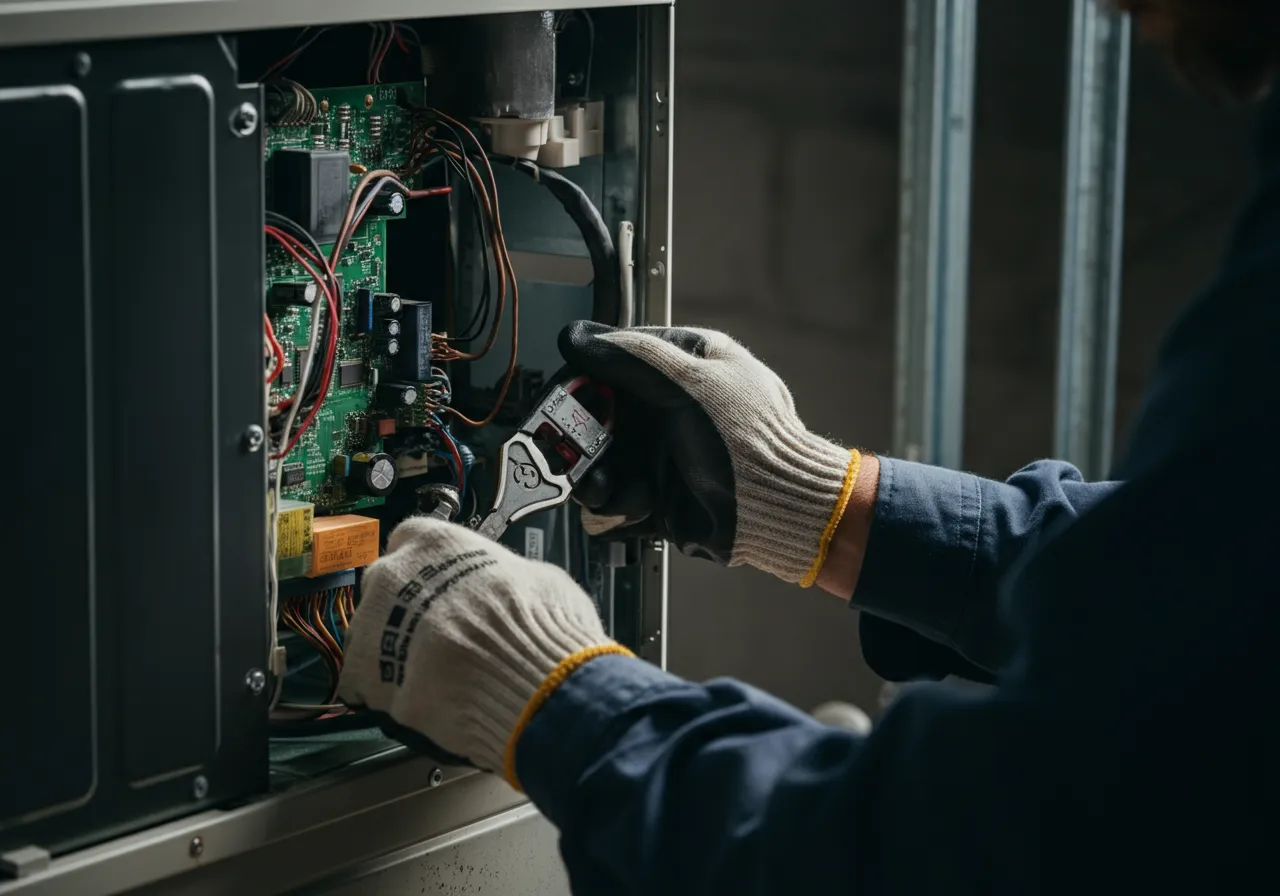
⚠️ Critical Safety Disclaimer
Working on PTAC units involves high-voltage electricity, refrigerants under pressure, and moving mechanical parts. Only qualified, licensed HVAC technicians should perform installation, major repairs, or refrigerant handling. Attempting these tasks yourself can result in severe electrical shock, refrigerant burns, system damage, or voiding warranties. This guide is for informational purposes to help you understand and maintain your unit, not to perform complex repairs.
PTAC Units: Key Features, Pros, and Cons
PTACs are a specific solution for specific building types. Here’s a breakdown of what they offer.
Advantages of PTAC Systems
- Independent Zoning: Each room has individual temperature control, eliminating arguments over the thermostat and saving energy in unoccupied spaces.
- No Ductwork Needed: Ideal for retrofitting older buildings where installing ducts is cost-prohibitive or structurally impossible.
- Easier Replacement: Units are standardized sizes. Swapping out a failed unit is often a one-day job for a technician.
- Combined Heating & Cooling: Most are heat pumps or offer electric heat, providing a complete climate solution in one package.
Disadvantages & Common Complaints
- Noise: Since the compressor and fans are right in the wall, they can be louder than a distant central air system.
- Aesthetic & Space: They protrude into the room and limit furniture placement near the wall.
- Energy Efficiency: While modern units are better, they are generally less efficient than a well-designed central system, especially when using electric resistance heat.
- Maintenance Responsibility: In multi-tenant buildings, filter cleaning often falls to the occupant, and neglect is common.
PTAC vs. Other Common Systems
| Feature | PTAC Unit | Central HVAC | Ductless Mini-Split |
|---|---|---|---|
| Installation | Through-wall sleeve, minimal construction | Extensive ductwork required | Wall-mounted indoor unit, outdoor condenser, refrigerant lines |
| Zoning Control | Excellent (per room) | Poor (typically one thermostat for a zone) | Excellent (per indoor unit) |
| Upfront Cost | Moderate (per unit) | Very High (whole system) | High (per head/outdoor pair) |
| Ideal For | Hotels, apartments, senior living, retrofits | New single-family homes | Room additions, homes without ducts, modern upgrades |
| Aesthetics & Noise | Bulky, moderate noise in room | Discreet, quiet in living space | Sleek indoor unit, quiet operation |
Essential PTAC Maintenance You Can (and Should) Do
Proper care prevents 80% of common problems. Always turn the unit OFF and unplug it at the wall before any maintenance.
- Clean the Air Filter Monthly: This is the #1 task. Slide out the filter (usually behind the front grille), wash it with mild soap and water, let it dry completely, and reinstall. A clogged filter restricts airflow, causing freezing coils and system failure.
- Clear the Outdoor Side: From outside, ensure the rear grille (condenser coil) is free of leaves, grass clippings, and debris. Gently vacuum it with a brush attachment.
- Inspect the Drainage: Ensure the condensate drain hole (on the bottom of the indoor side) is clear. A small wire or pipe cleaner can clear mild blockages.
- Clean the Front Grille & Interior: Wipe down the interior plastic and metal surfaces with a damp cloth to prevent dust buildup.
Troubleshooting Common PTAC Problems
- Unit Not Turning On: Check that it’s plugged in at the wall receptacle (often behind a removable panel). Check the circuit breaker. If both are good, the issue may be internal (capacitor, control board) – call a technician.
- Weak Airflow or Not Cooling: 99% of the time, this is a dirty filter. Clean it immediately. If airflow is still weak, the indoor fan motor may be failing.
- Ice on the Coils: Caused by a dirty filter, low refrigerant, or a failing fan. Turn the unit off to let it thaw, clean the filter, and if it reoccurs, call for service.
- Water Leaking Inside the Room: The condensate drain is clogged. Clear the drain hole as described in maintenance. If the leak is from the bottom of the outdoor side, it may be normal condensate from the condenser in humid weather.
- Loud Grinding or Squealing Noises: Often indicates a failing fan motor or debris hitting the fan blade. Requires technician attention.
Frequently Asked Questions (FAQ)
Can I replace a PTAC unit myself?
Not recommended. While the physical swap into an existing sleeve may seem straightforward, it requires correctly connecting high-voltage electrical wiring and, often, refrigerant lines. Improper installation is dangerous and will likely damage the new unit. This is a job for a licensed HVAC technician.
How long do PTAC units typically last?
With proper maintenance, a good-quality packaged terminal air conditioner has a typical service life of 10-15 years. Neglect, especially of the filter, can shorten this lifespan significantly.
Are modern PTACs more energy efficient?
Yes. Newer models must meet higher efficiency standards. Look for units with a higher EER (Energy Efficiency Ratio) for cooling and, if it’s a heat pump, a higher HSPF (Heating Seasonal Performance Factor). Upgrading an old, inefficient unit can lead to substantial savings on energy bills. For detailed information on efficiency standards and ratings, you can refer to resources from the U.S. Department of Energy.
Final Thoughts
Packaged Terminal AC units are the workhorses of the hospitality and multi-family housing industry for a reason. They offer practical, independent climate control where other systems aren’t feasible. Their biggest enemies are dirt and neglect. By understanding how they work and committing to simple, regular filter cleaning, you can ensure your PTAC provides reliable, comfortable air for years to come. When problems go beyond basic maintenance, always partner with a qualified professional to keep your system—and your occupants—safe and comfortable.