
If you’re responsible for a commercial building’s comfort, you know the rooftop unit (RTU) is the unsung hero—or the source of your biggest headaches. When that unit fails or needs replacement, you’re suddenly handed a spec sheet filled with acronyms and numbers that might as well be a foreign language. Choosing the wrong specs can lead to sky-high energy bills, uneven temperatures, and constant repair calls. This guide will translate those critical rooftop unit specifications into plain English, so you can make informed decisions and ensure your building runs efficiently.
What is a Rooftop Unit, and Why Do Specs Matter?
A rooftop unit, or RTU, is a self-contained, all-in-one heating and cooling system installed on the roof of commercial buildings like retail stores, offices, and warehouses. Think of it as your building’s dedicated climate command center. Unlike residential split systems with separate indoor and outdoor units, an RTU packages the compressor, condenser, evaporator coil, blower, and often gas heating into a single, weatherproof cabinet.
Specifications are the blueprint for this command center. Getting them right ensures the unit is powerful enough for your space (but not wasteful), efficient enough to control costs, and compatible with your building’s infrastructure. It’s the difference between buying a custom-tailored suit and one off the rack that almost fits.
Safety Disclaimer: Leave This to the Pros
WARNING: Rooftop units involve high-voltage electricity, hazardous refrigerants, and natural gas or combustion components. Only qualified, licensed HVAC technicians should perform installation, major repairs, or internal maintenance. This guide is for informational purposes to help building owners and managers understand equipment specifications and communicate effectively with their HVAC contractors. Never attempt to service an RTU yourself.
The RTU Analogy: Your Building’s Personal Athlete
Let’s simplify the core components using a sports analogy. Imagine your RTU is a star athlete responsible for your building’s climate.
- The Compressor (The Heart & Lungs): This is the athlete’s cardiovascular system. It pumps refrigerant (the lifeblood) through the entire system under high pressure, enabling the heat exchange process.
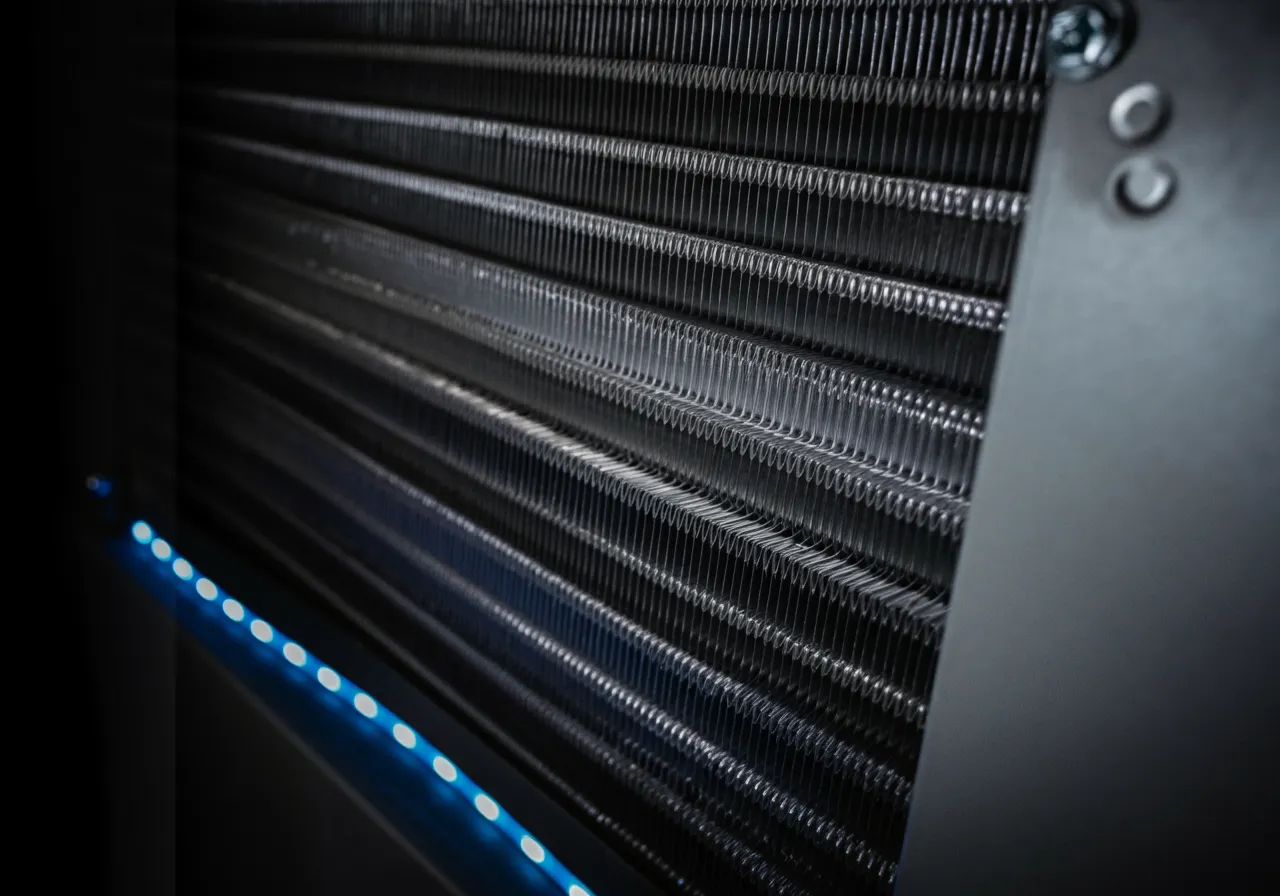
- The Condenser & Evaporator Coils (The Sweat Glands): These are the athlete’s cooling system. The outdoor condenser coil “sweats out” the building’s heat, releasing it to the outside air. The indoor evaporator coil absorbs heat and humidity from inside, cooling the air.
- The Blower Fan (The Circulatory System): This is the athlete’s powerful lungs and bloodstream. It circulates conditioned air throughout the building’s ductwork, delivering comfort to every room.
The specs we discuss next define this athlete’s capabilities: their size, strength, efficiency, and stamina.
Breaking Down Key Rooftop Unit Specifications
When reviewing an RTU spec sheet, focus on these five critical categories. This isn’t about memorizing formulas, but understanding what each number means for your building.
1. Cooling & Heating Capacity (The “Size”)
This is the most critical spec. Capacity is measured in British Thermal Units per hour (BTUh) or tons (1 ton = 12,000 BTUh).
- What it means: How much heat the unit can remove (cooling) or add (heating) in an hour.
- Why it matters: An undersized unit will run constantly and never reach the set temperature. An oversized unit will short-cycle (turn on/off rapidly), leading to poor humidity control, uneven temperatures, and premature wear. A proper Manual J load calculation performed by your HVAC pro determines the correct size based on your building’s square footage, insulation, windows, and occupancy.
2. Energy Efficiency Ratings (The “Stamina & Cost”)
These ratings tell you how much cooling or heating you get per unit of energy consumed. Higher numbers mean lower operating costs.
- SEER2 (Seasonal Energy Efficiency Ratio): The standard efficiency rating for cooling. Modern commercial RTUs typically range from 13-18+ SEER2.
- EER (Energy Efficiency Ratio): Measures efficiency at a specific outdoor temperature (usually 95°F). Important for hot climates.
- IEER (Integrated Energy Efficiency Ratio): A more comprehensive commercial rating that accounts for part-load operation, which is how systems run most of the time.
- Heating Efficiency: For gas heat, look for AFUE (Annual Fuel Utilization Efficiency) percentage. For heat pumps, look at HSPF2 (Heating Seasonal Performance Factor).
3. Electrical Specifications (The “Power Supply”)
This ensures the unit matches your building’s electrical infrastructure.
- Voltage & Phase: Common configurations are 208/230V or 460V, single-phase or three-phase. Installing a unit with the wrong voltage/phase will damage it and is a fire hazard.
- Minimum Circuit Ampacity (MCA) & Maximum Overcurrent Protection (MOP): These numbers, provided by the manufacturer, tell your electrician exactly what size wires and circuit breakers are required for safe operation.
4. Physical Dimensions & Curb Specifications
RTUs must fit on your roof’s curb—the metal frame that seals the unit to the roof.
- Footprint & Height: Confirm the unit’s length, width, and height fit the allocated roof space and meet local clearance codes.
- Curb Size: The RTU must match the curb’s rough opening dimensions. A mismatch can cause leaks, vibration, and structural issues.
5. Refrigerant Type
The refrigerant is the working fluid that absorbs and releases heat. This is a crucial environmental and future-proofing spec.
| Refrigerant | Common Name | Status & Key Consideration |
|---|---|---|
| R-410A | Puron | The current standard for new units. It has zero ozone-depletion potential but has a high Global Warming Potential (GWP). Production is being phased down. |
| R-454B | Opteon XL41 | A leading “mildly flammable” (A2L) next-generation refrigerant with ~78% lower GWP than R-410A. This is becoming the new standard for equipment. |
| R-22 | Freon | Phased out. No longer produced. If you have an older unit using R-22, repairs requiring refrigerant will be extremely expensive. Replacement is usually the best option. |
Signs Your RTU Specs Might Be Wrong
- Persistent Hot/Cold Spots: A classic sign of an improperly sized or poorly configured system.
- Rapid On/Off Cycling: The unit runs for very short bursts (less than 10 minutes) and then shuts off. This points to an oversized unit.
- Constantly Running: The unit never seems to satisfy the thermostat, indicating it may be undersized.
- Skyrocketing Energy Bills: A sudden, unexplained increase often points to an aging, inefficient unit or one that is the wrong size for the load.
- Excessive Humidity: An oversized unit cools the air too quickly without running long enough to remove adequate moisture.
Proactive Maintenance for Peak Performance
Even a perfectly specced RTU needs care. A semi-annual maintenance plan with a qualified commercial HVAC contractor should include:
- Spring (Cooling Tune-up): Clean condenser coils, check refrigerant charge, calibrate thermostats, inspect electrical connections, and test safety controls.
- Fall (Heating Tune-up): Inspect and clean burners/heat exchangers, check gas pressure, test ignition system, and clear drain lines.
- Year-Round: Keep the area around the unit clear of debris. Ensure roof drains near the curb are not clogged.
For a deeper dive into the technical standards that govern these systems, you can review resources from organizations like ASHRAE, a global society focused on building systems, sustainability, and indoor air quality.
RTU Specs FAQ
How long should a commercial rooftop unit last?
With proper installation, correct sizing, and diligent maintenance, a quality commercial RTU should provide 15-20 years of service. Neglect, improper sizing, and harsh environmental conditions can cut that lifespan in half.
Can I just replace my old RTU with a new one of the same tonnage?
Not necessarily. Building use, insulation, and windows may have changed. Always have a new load calculation performed. Furthermore, electrical specs and curb sizes can change between generations of equipment, so a direct “rip-and-replace” isn’t always possible without modifications.
What’s more important, SEER2 or IEER?
For commercial applications, IEER is often the more meaningful rating. Since RTUs rarely run at 100% capacity, the IEER rating gives you a better real-world picture of efficiency during the varying loads of a typical day, which directly impacts your operating costs.
Making Sense of the Spec Sheet
Understanding rooftop unit specifications empowers you to be a partner in your building’s comfort strategy, not just a recipient of a quote. By focusing on correct sizing, modern efficiency ratings, proper electrical specs, and future-ready refrigerants, you invest in a system that provides reliable comfort, controls operational expenses, and lasts for years to come. Always work with a reputable, licensed commercial HVAC contractor who will perform the necessary calculations and explain these specs in the context of your specific building.