
If you’re tired of seeing your energy bill spike every summer and winter, you’re not alone. For years in the field, I’ve seen homeowners struggle with outdated thermostats that waste energy and money. The right smart thermostat can change that, acting like a personal energy manager for your home. This guide cuts through the marketing hype to show you the top performers for 2025, based on compatibility, features, and real-world savings.
Why Your Old Thermostat is Costing You Money (A Technician’s View)
Think of your home’s HVAC system—your air conditioner, furnace, or heat pump—as the engine of a car. Your thermostat is the driver. An old, basic thermostat is like a driver who only knows two speeds: full throttle and completely off. It waits until your home is too hot or too cold, then cranks the system to 100% until the temperature is corrected, wasting fuel (electricity or gas).
A modern smart thermostat is like a skilled driver with a GPS and traffic reports. It learns your schedule, knows how long it takes to heat or cool your home, and makes small, efficient adjustments along the way. It can coast when you’re not home and pre-condition the space just before you return. This “drive” is smoother and uses far less energy, which is why these devices can pay for themselves in a season or two.
⚠️ Critical Safety Disclaimer
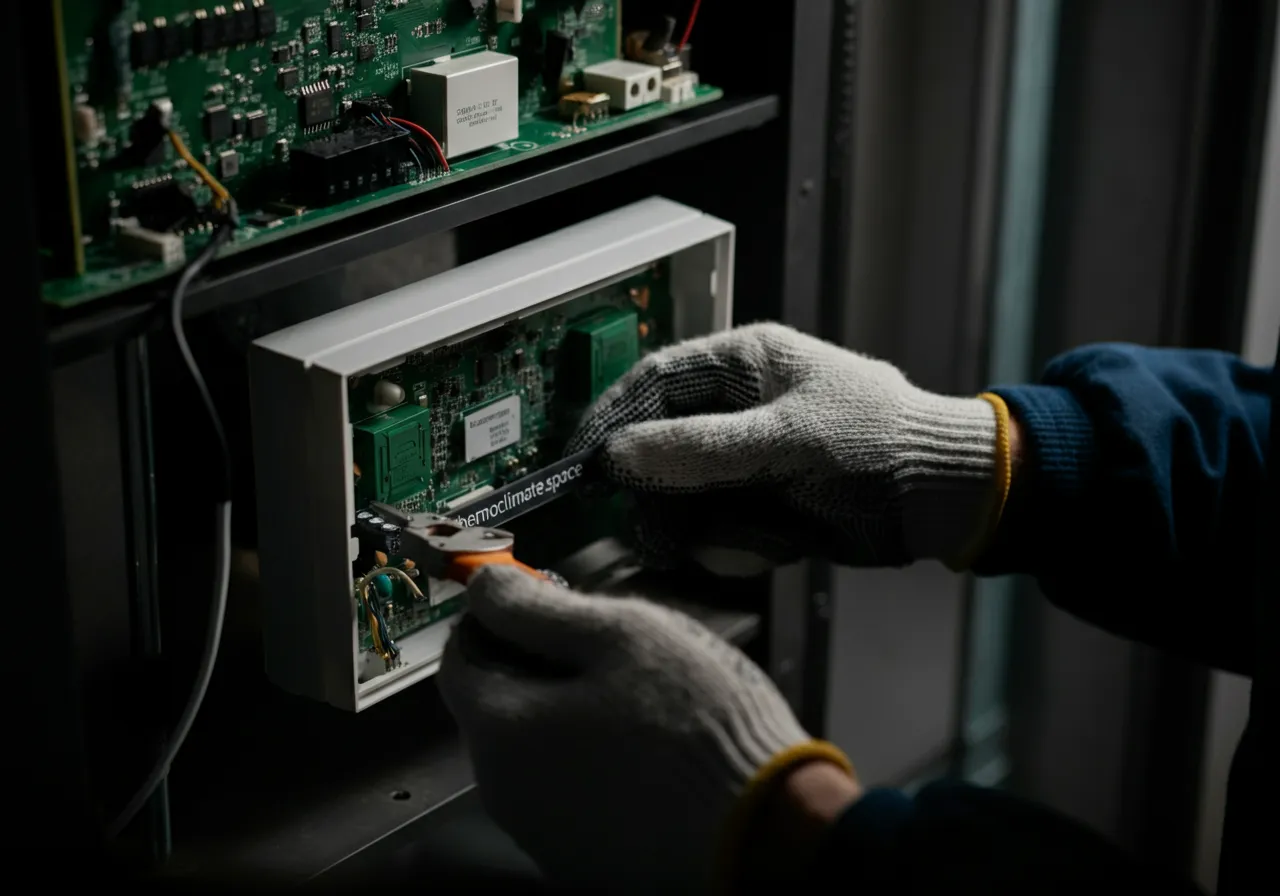
Installing a thermostat involves working with low-voltage wiring (typically 24V) from your HVAC system. While generally safe, incorrect wiring can damage your expensive furnace control board or air handler. Always turn off the power to your HVAC system at the circuit breaker before removing your old thermostat or touching any wires. If you are uncomfortable identifying wires or lack a common “C” wire (power wire), hiring a professional is a wise investment. This article is for informational purposes.
The 2025 Smart Thermostat Lineup: Features That Matter
Forget gimmicks. When I evaluate these for a customer’s home, I look at four things: compatibility with their system, reliability of control, intuitive interface, and proven energy-saving features. Here are the top contenders.
1. The All-Around Champion: Ecobee Smart Thermostat Premium
Ecobee remains a technician favorite for good reason. It includes a smart sensor in the box, which is a game-changer for homes with uneven temperatures. You can place it in the room you actually use, and the thermostat will prioritize comfort there. Its built-in Alexa and air quality monitor are nice bonuses, but its true strength is its robust scheduling and detailed energy reports that show you exactly where you’re saving.
- Best For: Homes with hot/cold spots, tech-savvy users who love data.
- Key Feature: Multi-room smart sensors for balanced comfort.
2. The Ecosystem Powerhouse: Google Nest Learning Thermostat
The Nest’s iconic design hides a powerful brain. Its “Learning” feature is legit—after about a week of you adjusting temperatures, it builds a schedule automatically. It excels within the Google Home ecosystem. If you have a heat pump system (increasingly common), its “Seasonal Savings” feature can optimize its run times for maximum efficiency, something I appreciate from a mechanical standpoint.
- Best For: Google Home users, those who want a “set it and forget it” learning schedule.
- Key Feature: True auto-scheduling and deep heat pump optimization.
3. The Reliable Workhorse: Emerson Sensi Touch 2
When I need a reliable, no-fuss smart thermostat that works with almost any system (including older millivolt systems), I recommend the Sensi. It doesn’t have all the bells and whistles, but its installation is straightforward with a fantastic app that walks you through wiring step-by-step. It offers flexible scheduling and geofencing. For homeowners who want smart control without complexity, this is a top-tier choice.
- Best For: First-time smart thermostat buyers, homes with unique or older HVAC systems.
- Key Feature: Broadest system compatibility and the best DIY installation guide.
Head-to-Head Comparison: 2025’s Top Smart Thermostats
| Model | Best For | Key Tech Feature | DIY Install Difficulty | Voice Assistant |
|---|---|---|---|---|
| Ecobee Premium | Balancing multi-room temps | Room Sensors Included | Medium (C-wire recommended) | Alexa Built-in |
| Google Nest Learning | Automated schedules & heat pumps | True Auto-Schedule Learning | Medium | Google Assistant |
| Emerson Sensi Touch 2 | Wide compatibility & reliability | Superior Compatibility | Easy | Works with All |
Your Pre-Installation Checklist: Don’t Buy Before You Check This
- Check Your System: Is it a standard furnace/AC, heat pump, or a more complex system like multi-stage or dual-fuel? The product’s compatibility checker is your first stop.
- Find Your “C” Wire: This common wire provides constant power. Many newer Wi-Fi thermostats require it. Remove your old thermostat’s faceplate (POWER OFF FIRST!) and see if you have a wire labeled ‘C’ or connected to the C terminal. If not, some models like the Ecobee include a power extender kit, or you may need professional help. The Department of Energy has a good primer on thermostat types and savings.
- Take a Picture: Before disconnecting any wires, snap a clear photo of the wiring. This is your roadmap for installation.
Smart Thermostat FAQ
Will a smart thermostat work with my old HVAC system?
Most likely, yes. The majority of forced-air systems from the last 30 years use standard 24V low-voltage wiring, which is compatible. The key is checking the specific model’s compatibility tool online using your system type (e.g., gas furnace, heat pump) and wiring.
I don’t have a “C” wire. Can I still install one?
Often, yes, but it depends. Some models, like the Emerson Sensi, can often run without a C-wire using batteries. Others, like newer Ecobee or Nest models, include an accessory (power extender kit) that can tap power from your air handler, but this installation is more advanced and may require a pro.
How much can I really save with a smart thermostat?
Savings vary, but 8-12% on heating and 15% on cooling is a common realistic range according to ENERGY STAR, provided you use the programming features. The savings come from reducing runtime when you’re asleep or away. A learning thermostat that does this automatically tends to save the most for most households.
The Bottom Line
Upgrading to one of the best smart thermostats of 2025 isn’t just about tech—it’s about taking direct control of your home’s biggest energy expense. Whether you choose the sensor-driven Ecobee, the self-learning Nest, or the universally compatible Sensi, you’re investing in a device that pays you back in comfort and lower bills. Just remember to do your compatibility homework, turn off the power, and when in doubt, call a local pro to ensure it’s done right.