
Thinking about swapping your old furnace and AC for a sleek, all-in-one heat pump? You’re not alone. With rising energy costs and a push for greener homes, air source heat pumps are becoming the go-to upgrade for year-round comfort. But the idea of installing one can feel overwhelming. Is it a simple swap? What actually happens during installation day? I’ve been in your living room for over 20 years, explaining this process to homeowners just like you. Let’s break down exactly what a professional air source heat pump installation entails, so you can make an informed decision with confidence.
How Does an Air Source Heat Pump Work? The Refrigerant Highway Analogy
Before we talk installation, let’s understand the machine. Think of the refrigerant inside the heat pump as a fleet of delivery trucks on a never-ending loop, and the compressor as the distribution center.
In cooling mode, the trucks (refrigerant) start outside at your condenser unit. They pick up a load of heat from your house’s air inside and drive it outside, dumping the heat into the outdoor air. They return inside empty and cool, ready to pick up another load.
In heating mode, the system simply reverses the route! The distribution center (compressor) changes direction. Now, the trucks go outside to the condenser unit, which acts like a scavenger, picking up heat energy from the cold outdoor air (yes, even cold air has heat energy). They then drive that heat inside and deliver it to your home’s air handler or furnace coil.
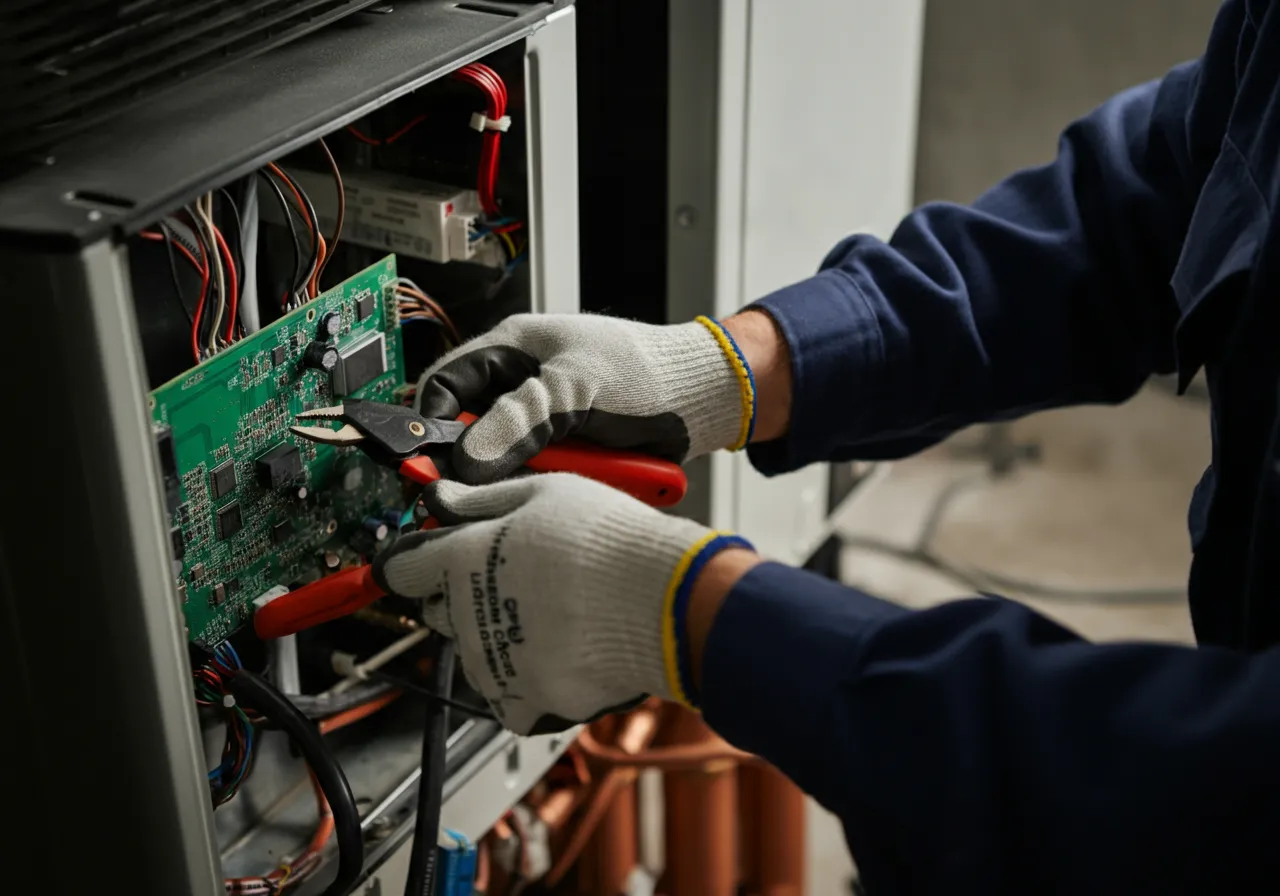
This brilliant reversal is why a single air-to-air heat pump system can both heat and cool your home efficiently. The key to its performance lies in a proper, precision installation.
This guide is for informational purposes only. Installing an air source heat pump involves high-voltage electricity (240V), refrigerant handling (which requires an EPA certification), brazing with torches, and complex system calibration. Incorrect installation can lead to electrocution, fire, refrigerant leaks, system failure, voided warranties, and significantly reduced efficiency. This is not a DIY project. Always hire a licensed, insured, and NATE-certified HVAC contractor. They will ensure the installation complies with all local building codes, electrical codes (NEC), and mechanical codes (IMC).
What Does Professional Heat Pump Installation Involve? A Step-by-Step Breakdown
A proper installation is a multi-step process focused on longevity and efficiency. Here’s what a quality HVAC crew will do.
Phase 1: The Pre-Installation Site Evaluation & Sizing
This is the most critical step that happens before you buy anything. A good contractor will perform a Manual J load calculation. This isn’t a guess; it’s a math-based analysis of your home’s square footage, insulation, windows, and local climate to determine the exact heating and cooling capacity (in BTUs) you need. An oversized or undersized unit will lead to comfort issues, short cycling, and high bills.
Phase 2: Installation Day – The Key Steps
- Removal & Preparation: The team will safely disconnect and remove your old outdoor AC or heat pump unit and indoor coil. They’ll prepare the new sites, ensuring a stable, level concrete pad or composite stand for the outdoor unit.
- Setting the Outdoor Unit: The new air source heat pump condenser is placed. Proper clearance (usually 24-36 inches on all sides) is crucial for airflow and service access.
- Indoor Unit Integration: The new matching indoor air handler or coil is installed. If you have a furnace, the coil sits on top. In an air handler system, it’s built-in. All connections are sealed.
- The Refrigerant Lineset: The existing copper lines are evaluated. Often, they must be replaced with new, correctly sized linesets. The contractor will braze (solder) the connections under an inert nitrogen purge to prevent internal contamination—a sign of a pro.
- Electrical Connections: A new dedicated 240V circuit from your electrical panel is typically run to the outdoor unit. All connections are made in weatherproof enclosures. This is high-voltage work for licensed electricians or HVAC techs only.
- Vacuum & Charge: The system is connected to a powerful vacuum pump for a deep evacuation (often for 45+ minutes) to remove all moisture and air. Then, the exact amount of refrigerant specified by the manufacturer is weighed in.
- System Startup & Commissioning: This is the final test drive. The technician will start the system, measure superheat/subcooling, check airflow across the coils, verify the reversing valve operation, and calibrate the thermostat. They should provide you with the startup report.
Air Source Heat Pump vs. Traditional Systems: A Quick Comparison
| Feature | Air Source Heat Pump | Gas Furnace + Central AC |
|---|---|---|
| Primary Function | Both heating & cooling in one unit | Separate systems for each function |
| Heating Fuel/Efficiency | Electricity; High Efficiency (200-300%+ via COP) | Gas/Oil; High Efficiency (90-98% AFUE) |
| Operating Cost | Lower in mild climates; depends on electric vs. gas prices | Lower in very cold climates with cheap gas |
| Installation Complexity/Cost | Moderate-High (requires dual-fuel or backup heat assessment) | Moderate (two separate installs) |
| Environmental Impact | Lower carbon footprint if using clean grid electricity | Higher direct fossil fuel consumption |
Maintenance Tips for Your New System
- Keep It Clear: Maintain 2-3 feet of clearance around the outdoor unit. Trim back shrubs and keep leaves/debris clear.
- Filter Changes are Law: Change your 1-inch furnace filter every 1-3 months. A clogged filter is the #1 cause of poor performance and freeze-ups.
- Schedule Bi-Annual Tune-ups: Have a professional service your heat pump system twice a year—once in spring for cooling and once in fall for heating. They will check refrigerant levels, electrical components, and airflow.
- Listen for Changes: Unusual grinding, rattling, or squealing noises from the outdoor unit are a call for service.
Frequently Asked Questions (FAQ)
Q: How cold can an air source heat pump work effectively?
A: Modern cold-climate air source heat pumps can operate efficiently down to -15°F or lower. However, in regions with sustained sub-freezing temperatures, most systems are paired with a backup heat source (like electric resistance strips in the air handler or your existing gas furnace) in a “dual-fuel” setup. This provides the most cost-effective and reliable comfort.
Q: Will a heat pump save me money?
A: It depends on your local climate and utility rates. If you are replacing an old, inefficient electric furnace or baseboard heat, you will see significant savings. If replacing a modern, high-efficiency natural gas furnace, the savings may be less dramatic on heating, but you gain ultra-efficient cooling. The U.S. Department of Energy is a great resource for understanding efficiency and savings potential.
Q: How long does the installation take?
A: For a standard, straight-forward replacement with no ductwork modifications, a professional crew of 2-3 can typically complete a full air-to-air heat pump installation in one full day (8-10 hours). More complex jobs involving new ductwork, electrical service upgrades, or a full system changeover may take 2-3 days.
Making the Decision
Investing in an air source heat pump is a smart move for long-term comfort and efficiency, but its success hinges entirely on a quality installation. Your goal isn’t just to buy a unit; it’s to hire a contractor with the expertise to size it right, install it precisely, and commission it for peak performance. Get multiple quotes, ask for references, and ensure they perform a Manual J calculation. A properly installed heat pump isn’t just an appliance; it’s the quiet, reliable heartbeat of your home’s comfort for the next 15+ years.